A shopping cart rolling loose in the wind, a door opened too far in a crowded lot, or a bumper tapped while backing out can leave a frustrating reminder on an otherwise well-kept vehicle. Common parking dent repairs range from quick paintless dent removal to more involved body and paint work, depending on the panel, the depth of the damage, and whether the finish has been broken.
The dent may look minor, but a proper inspection matters. A small mark on a door can involve a sharp crease, stretched metal, damaged paint, or an area close to a body line where the repair requires more precision. The goal is not simply to make the dent less noticeable. It is to restore the panel’s shape and appearance while protecting the vehicle from preventable paint or corrosion problems.
Common Parking Dent Repairs Explained
Parking-lot damage is not all the same, and the right repair method should match the condition of the vehicle. A qualified technician considers the material of the panel, the location of the damage, paint condition, and access behind the dent before recommending a repair.
Door dings and shallow dents
Small, rounded door dings are among the most common parking-lot repairs. When the factory paint is still intact and the metal has not been sharply creased or stretched, paintless dent repair may be a good option. This process uses specialized tools to carefully massage the panel back toward its original shape from behind the damaged area. In some cases, controlled pulling methods may be used from the exterior.
Paintless dent repair can preserve the original finish and avoid repainting the panel. That makes it particularly appealing for newer vehicles, lease returns, and cars with factory paint in good condition. Still, it is not a universal solution. A ding along a strong body line or near the edge of a panel may need more detailed work than a shallow dent in the center of a door.
Creased door panels
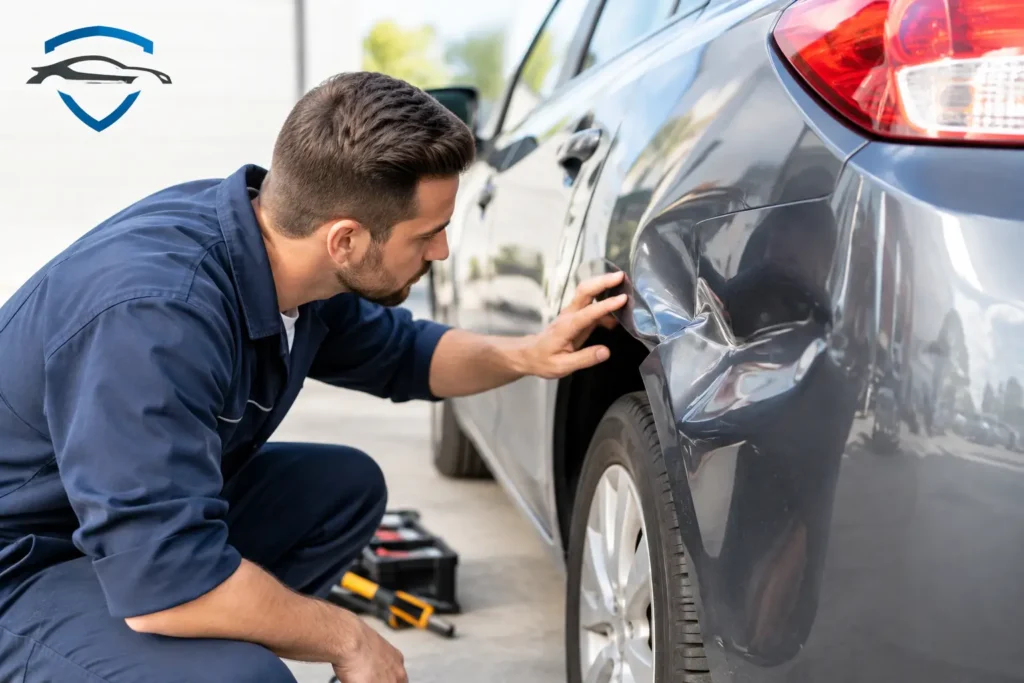
A crease is different from a rounded ding. It usually happens when a door edge, cart, or another object presses into the panel and leaves a defined line rather than a soft depression. Even when the paint remains intact, creases can be more difficult to remove because the metal has been pushed and stretched in a concentrated area.
Depending on the severity, a technician may be able to improve or remove the crease with paintless techniques. If the paint is cracked, the metal is stretched, or the damaged area cannot be properly accessed, conventional dent repair is often the more dependable choice. This can involve reshaping the panel, applying a minimal amount of body filler where needed, priming, and refinishing the affected area.
Bumper scuffs, dents, and splits
Modern bumpers are usually made from flexible plastic rather than metal, so they respond differently to an impact. A light scuff may only need surface preparation and paint repair. A dented bumper cover may be reshaped if the plastic is not torn or overly distorted. Deeper damage, cracks, or mounting issues may call for bumper repair or replacement after an inspection.
Color matching is a key part of bumper work. Paint can age differently across various panels due to sunlight, weather, and prior repairs. A professional refinishing process accounts for the vehicle’s existing color so the repaired bumper looks appropriate beside the surrounding panels.
Dents with chipped or cracked paint
When paint has been chipped, scraped, or cracked, paintless dent repair is generally not the right answer on its own. Exposed metal can begin to corrode, especially after repeated rain, snow, road salt, and temperature changes common in northeastern Illinois and southeastern Wisconsin.
The repair usually starts with restoring the shape of the panel. The technician then prepares the damaged area, applies the needed primers and color coats, and protects the repair with clear coat. For some damage, blending paint into an adjacent area may be recommended to achieve a consistent appearance. The exact approach depends on the paint color, damage location, and condition of the panel.
Damage near body lines, trim, and sensors
The character lines built into modern doors, quarter panels, and fenders give a vehicle its shape, but they also make dent repair more demanding. A small dent that crosses one of these lines can catch the eye because it disrupts the panel’s reflection. Repairs near moldings, handles, cameras, parking sensors, and trim need careful planning to avoid affecting nearby components.
This is one reason a visual estimate is helpful. What appears to be one small dent may require trim removal, sensor checks, or paint work that cannot be accurately judged from a quick photo alone.
How a Shop Chooses the Right Parking Dent Repair
The best repair is not always the fastest-looking option or the one with the fewest steps. It depends on what will properly address the damage without unnecessary work. Technicians typically look at whether the paint is intact, how deeply the panel is displaced, whether the material is metal or plastic, and whether there is access behind the damaged area.
They also inspect the panel from different angles and under proper lighting. Reflections reveal distortions that are easy to miss in a driveway or parking lot. On bumpers and lower panels, an inspection can also identify hidden damage to brackets, liners, or mounting points.
For a clean door ding with intact paint, paintless repair may be the sensible choice. For a deep crease with broken paint, conventional body repair and refinishing may provide a more complete result. If a bumper has a crack or no longer fits correctly, the conversation may shift from cosmetic repair to restoring proper fit and function.
Why DIY Parking Dent Fixes Can Create More Work
There is no shortage of online advice involving suction cups, heat, glue tabs, or improvised tools. Some methods may appear to help with a broad, shallow dent, but they carry real risks. Excess heat can affect paint or plastic. Aggressive pulling can create high spots. Poorly placed tools can leave additional marks that are harder to correct than the original dent.
Paint touch-up products also have limits. They can help protect a tiny chip in some situations, but they do not restore a dented panel or recreate the smooth finish of a professional repair. On metallic, pearl, or tri-coat colors, a visible mismatch is especially easy to spot.
If you are unsure whether damage is paintless-repair eligible, it is often better to have it assessed before attempting a home fix. A clear estimate gives you practical options and helps prevent a small issue from becoming a larger repair.
When to Address a Parking Dent
A dent with intact paint is mostly an appearance concern, though it may affect resale value or make a newer vehicle feel less cared for. A dent with damaged paint deserves more prompt attention because moisture can reach the underlying metal. Rust does not always appear immediately, but once corrosion begins beneath the finish, repair can become more involved.
It is also wise to schedule an inspection sooner if a bumper is loose, a door no longer opens or closes smoothly, a parking sensor behaves differently, or the damage followed a harder impact than it first seemed. Those signs may point to more than a cosmetic issue.
For drivers dealing with parking-lot damage in Lake County and nearby communities, Carbon Collision Repair can inspect the affected area, explain the repair options in plain language, and provide a free estimate. The right next step is simple: get the dent looked at while the repair can stay focused on restoring your vehicle’s appearance and protecting its finish.