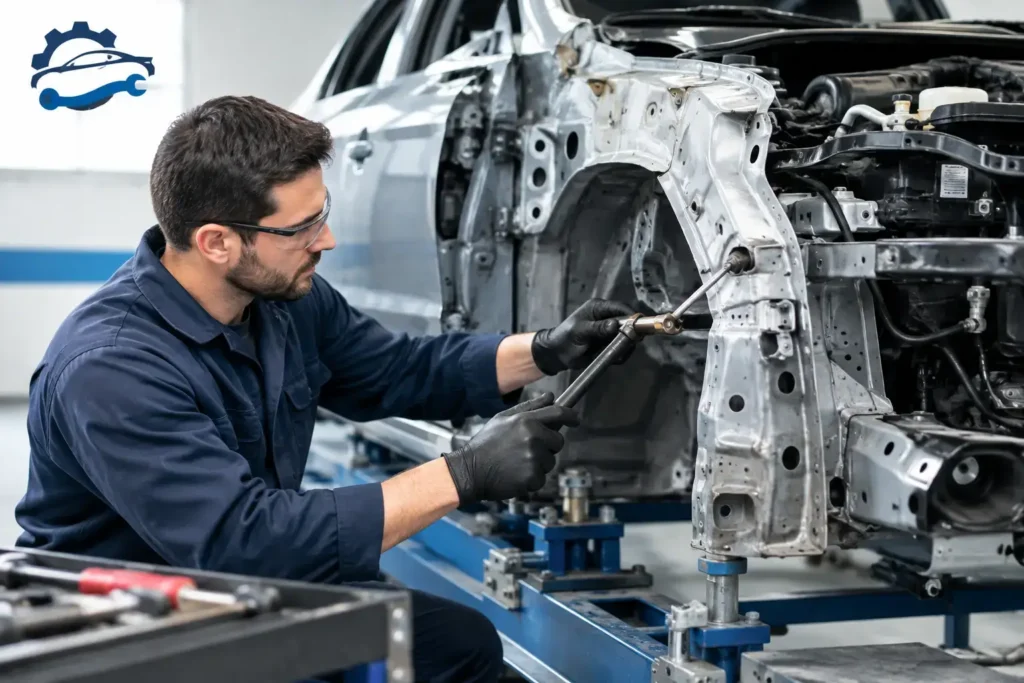
A low-speed collision can leave a vehicle looking surprisingly normal while affecting the structure underneath its exterior panels. This guide to unibody frame repair explains what that means for your vehicle, why accurate inspection matters, and what a quality repair process should look like after an accident.
Many modern cars, SUVs, crossovers, and light trucks are built with a unibody structure rather than a separate, full-length frame. When that structure is damaged, the goal is not simply to make the vehicle look straight again. The repair must restore critical mounting points, panel alignment, and the way the vehicle was engineered to manage impact forces.
What Is a Unibody Structure?
A traditional body-on-frame vehicle has a separate frame underneath the body. The frame carries much of the vehicle’s structural load, while the body sits on top of it. Unibody vehicles combine the body and structural framework into one integrated design.
This construction helps manufacturers reduce weight, improve fuel efficiency, and create predictable crash-energy paths. Areas such as the front rails, rear rails, rocker panels, pillars, floor pan, and strut towers all work together as part of the vehicle’s structure.
That is why the term “frame damage” is still commonly used, even when a vehicle does not have a conventional frame. On a unibody vehicle, damage may involve a rail, apron, inner panel, suspension mounting area, or other structural component. The repair approach depends on exactly where the impact occurred and how far the metal has moved.
Signs You May Need Unibody Frame Repair
Visible bumper or fender damage does not always tell the whole story. Structural damage can be hidden behind covers, trim, wheel-well liners, and exterior panels. A professional inspection is the most reliable way to determine the condition of the vehicle, but drivers may notice warning signs after a collision.
Uneven gaps between body panels, a hood or trunk that no longer closes properly, or doors that need extra force to latch can point to movement in the underlying structure. A vehicle that pulls to one side, has an off-center steering wheel, or shows unusual tire wear may also need attention. These issues can be caused by alignment or suspension damage, but they may also be connected to structural movement.
Other clues include a wheel that appears pushed backward in the wheel opening, a visible crease near a door opening or roof pillar, or fresh water leaks after a crash. Even if the vehicle drives normally, it is wise to have it inspected following a meaningful impact. Modern vehicles are designed with components that absorb energy, and that energy can travel farther than the visible damage suggests.
Why Measurements Matter More Than Appearance
A vehicle can look repaired from the outside and still be out of specification underneath. That is why quality unibody repair begins with measurement, not with paint or replacement panels.
Collision technicians use manufacturer repair information and computerized measuring equipment to compare key points on the damaged vehicle with factory specifications. This process identifies whether rails, suspension points, or other structural areas have shifted. It also helps the repair team determine whether a component can be repaired according to approved procedures or should be replaced.
Precise measurements matter because many systems rely on proper structural positioning. Suspension alignment, headlight aim, door fit, wheel placement, and the operation of advanced driver-assistance features can all be affected by collision damage. Restoring the shape of a panel is valuable, but restoring the vehicle’s underlying geometry is the work that supports a dependable repair.
How the Unibody Repair Process Works
Every collision is different, so repair steps vary by vehicle, impact location, and the extent of damage. Still, a thorough process generally follows a clear order.
Inspection and Repair Planning
The process starts with a detailed visual inspection, diagnostic scanning when appropriate, and structural measurements. Technicians document visible damage and look for concealed damage that may appear once parts are removed. This information helps create an accurate repair plan and gives the vehicle owner a clearer picture of what is involved.
In some cases, additional damage is found after disassembly. That is not necessarily a sign of poor planning. Bumpers, lamps, interior trim, and exterior panels can hide areas that cannot be fully evaluated at the first estimate. Clear communication during this stage helps avoid surprises.
Controlled Structural Correction
If the unibody structure has moved, the vehicle may be secured to specialized repair equipment. Technicians use measured, controlled pulls to return affected areas toward factory specifications. This work is not about force alone. It requires an understanding of how the metal moved, where it is designed to deform, and which areas must remain stable during correction.
Depending on manufacturer procedures, the repair may involve straightening a repairable section, replacing a damaged structural panel, or using approved sectioning methods. High-strength steels, aluminum, and mixed-material vehicle designs can require different tools and procedures. Using the right method for the specific vehicle protects the integrity of the repair.
Mechanical, Body, and Safety-System Repairs
Structural damage often overlaps with other repairs. A collision may affect suspension parts, steering components, cooling systems, wiring, glass, or exterior panels. Once the structure is corrected, the repair team can address these related concerns and confirm that panels, doors, hood, and liftgate fit as intended.
Modern vehicles may also require diagnostic scans, sensor inspections, wheel alignment, or calibration procedures after repairs. The exact requirements depend on the vehicle and the damaged systems. Skipping these steps simply because the exterior looks finished can leave important issues unresolved.
Refinishing and Final Quality Checks
After structural and body repairs are complete, repaired or replaced panels are prepared for paint and refinishing. Color matching, surface preparation, and proper blending all contribute to a consistent appearance.
Final checks should include verifying panel fit, reviewing structural measurements where applicable, confirming mechanical operation, and addressing any required calibration or alignment work. The goal is a vehicle that not only looks cared for but has received the methodical attention collision damage demands.
Repair, Replacement, or a Total Loss Decision?
Not every damaged unibody vehicle should be repaired, and not every visible structural issue means the vehicle cannot be repaired. The decision depends on the vehicle’s condition, the location and severity of damage, manufacturer repair procedures, parts availability, and the cost of repairs in relation to the vehicle’s value.
Some rails or structural components can be repaired when procedures allow it. Others are designed to be replaced after a certain level of damage. A reputable collision repair shop should explain what it sees, document the repair plan, and communicate if disassembly changes the scope of work.
For insurance-related repairs, the insurer typically reviews the estimate and determines coverage based on the policy and claim details. You can choose a repair facility you trust, and a knowledgeable shop can help provide repair documentation and communicate with the insurance process. Coverage decisions remain with the insurer, but clear estimates and careful repair planning can make the process easier to understand.
Questions to Ask Before Approving Structural Repairs
When your vehicle has possible unibody damage, asking a few direct questions can give you confidence in the process. Ask how the structure will be measured, whether manufacturer repair procedures will be followed, and whether the estimate may change after disassembly. It is also reasonable to ask how related alignment, diagnostic, and calibration needs will be evaluated.
Pay attention to communication as much as the answer itself. Structural repairs can be complex, and you deserve straightforward updates rather than vague promises. A shop should be willing to explain the next step in plain language and let you know when additional findings affect the repair plan.
Get the Right Inspection After a Collision
If your vehicle has been hit, do not judge the damage by the bumper alone. A proper inspection can identify whether the issue is cosmetic, mechanical, structural, or a combination of all three. Addressing concerns early can help prevent misalignment, uneven tire wear, water leaks, and ongoing fitment problems.
For drivers in Antioch, Waukegan, and surrounding Lake County communities, Carbon Collision Repair provides careful collision inspections, structural repair planning, and assistance with the insurance repair process. The most helpful next step after an accident is often a clear, honest assessment from a shop that treats your vehicle with the same attention it would give its own.