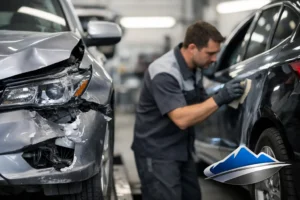
A paint repair can look perfect under fluorescent shop lights and noticeably different the first time you pull into your driveway. That is why choosing among the best shops for paint matching is about more than finding a shop that can spray the correct color code. It is about finding technicians who understand how paint ages, how light changes color, and how to blend a repair so it belongs on the vehicle.
Whether your car has bumper damage from a parking lot, a scraped door, or collision damage that requires panel repair, the goal should be the same: a finish that looks natural, holds up over time, and restores confidence in your vehicle.
Why paint matching is harder than it sounds
Every vehicle leaves the factory with a paint code, but that code is only the starting point. Factory colors can have multiple variants, and the paint on your vehicle has been exposed to sun, rain, road salt, washing, and everyday wear. Over several years, a bright white may warm slightly, a red may fade, and a metallic gray may reflect differently than it did when new.
Metallic and pearl colors are especially demanding. Their appearance depends on more than pigment. The direction of the spray, the size and position of metallic flakes, coat thickness, and clear coat can all affect how the color reads from different angles. A panel that looks right straight on may look too dark or too blue from the side if the process was rushed.
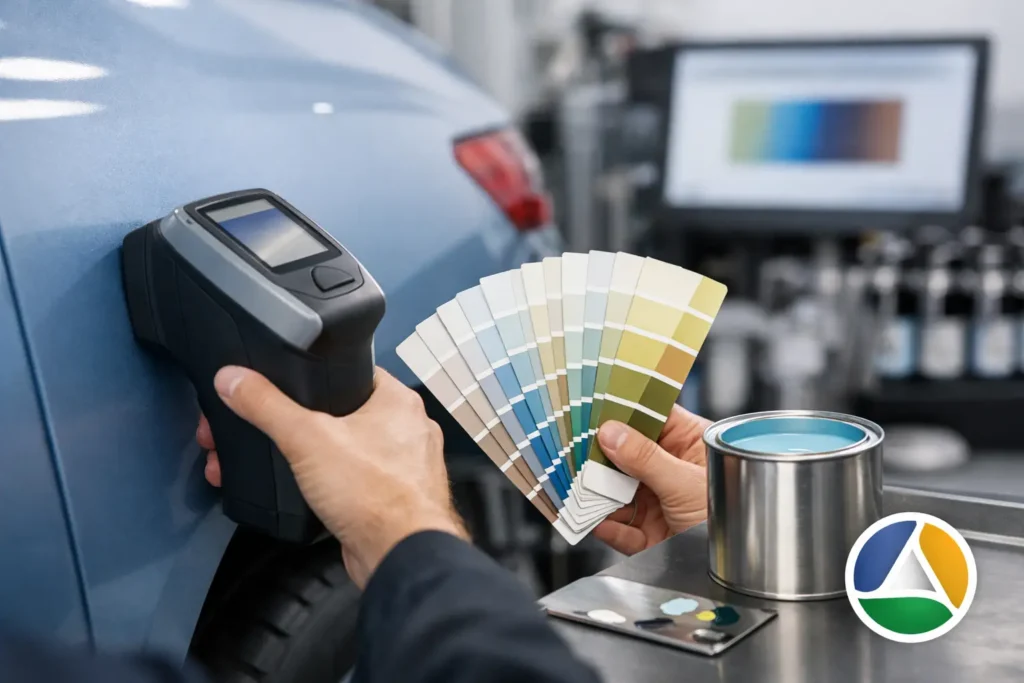
A quality shop does not simply mix paint based on the code and hope for the best. The team checks the existing finish, uses professional color-matching equipment and spray-out cards when needed, then adjusts the formula before applying paint to the vehicle. That extra care is often the difference between a repair that disappears and one that catches your eye every time you walk up to the car.
What the best shops for paint matching do differently
The strongest paint work begins before the paint booth. Surface preparation matters just as much as color. A repaired panel must be properly cleaned, sanded, primed, and leveled so the new finish lays evenly. If a shop skips preparation to save time, the result may show texture problems, rough edges, peeling, or an uneven sheen later.
Experienced shops also know when blending is necessary. Rather than painting only the damaged portion of a door or fender, they may blend color into an adjacent panel. This softens the transition between old and new paint, particularly when the original finish has changed with age. Blending can add time and material cost, but it is often the responsible choice for a repair that will look consistent outside, not just in the shop.
The clear coat deserves equal attention. Clear coat protects the color underneath and creates the gloss, depth, and smoothness people associate with a well-kept vehicle. A poor clear coat application can leave a panel looking flatter, glossier, or more textured than the surrounding panels even if the base color is close.
Finally, reputable shops inspect the work in more than one type of light. Sunlight, cloudy daylight, LED lighting, and garage lighting can all reveal different things. A final inspection should look beyond whether the paint is dry. It should confirm that panel gaps, trim, sensors, moldings, and body lines are properly reassembled as well.
Questions to ask before approving a paint repair
You do not need to be a paint expert to get a better repair. A few clear questions will tell you a lot about a shop’s process and willingness to stand behind its work.
Ask whether the estimate includes blending adjacent panels when needed. There is no one answer for every repair, but a shop should be able to explain why it recommends a spot repair, a full-panel refinish, or a blend. Be cautious if the lowest estimate leaves out steps that another qualified shop says are necessary for color consistency.
Ask how the shop verifies the color match. A good answer may include checking the paint code, evaluating the vehicle’s current finish, using a color camera or spectrophotometer, and spraying test panels before final application. The process can vary by color and vehicle condition, but there should be a process.
It also helps to ask about the repair warranty and what it covers. Paint concerns are not always visible the day you pick up the vehicle. Clear communication about workmanship coverage gives you a better idea of how the shop handles its responsibility after the repair is complete.
If insurance is involved, ask whether the shop works directly with insurers and whether the estimate accounts for needed repair procedures. Insurance claims can feel overwhelming after an accident. The right repair facility can help document damage, communicate clearly, and explain any changes found once the vehicle is disassembled.
Do not judge paint work by the estimate alone
Price matters, especially when a repair was not part of an insurance claim. Still, paint matching is one area where the cheapest quote can become expensive if the work needs to be corrected later. A low estimate may reflect a smaller repair area, fewer preparation steps, lower-quality materials, or no allowance for blending.
That does not mean the most expensive estimate is automatically best. What matters is whether the quote explains the work being performed. You should be able to understand what panels are being repaired, refinished, or blended, along with whether molding, badges, lights, or other components need to be removed and reinstalled.
A trustworthy shop will talk plainly about trade-offs. For example, a minor scratch on an older daily driver may not justify refinishing and blending multiple panels if the owner is comfortable with a close match. On a newer vehicle, a lease return, a classic car, or a highly visible panel, a more thorough repair may be the better value. The right recommendation depends on your expectations, the vehicle’s condition, and how long you plan to keep it.
Signs a shop takes the finish seriously
Pay attention to how the shop evaluates your vehicle during the estimate. Do they look at the damage from several angles? Do they explain that hidden damage or color variations may affect the final scope? Are they willing to answer questions without making vague promises?
A clean, organized repair environment is also encouraging, though it is not the only factor. Paint work requires control over dust, temperature, and airflow. Professional equipment and a maintained paint area support a better result, but skilled technicians and careful preparation remain essential.
Before-and-after photos can be useful, particularly when they show similar colors or repairs. Ask to see examples of metallic, pearl, tri-coat, or custom work if your vehicle has a finish that requires extra attention. The goal is not to look for a perfect social media photo. It is to see evidence of consistent craftsmanship across different jobs.
Local drivers in Lake, McHenry, Boone, and Kenosha counties should also value communication. A good shop keeps you informed if repairs uncover additional damage, parts are delayed, or a paint process needs more time to meet the expected standard. Fast turnaround is valuable, but it should never come at the cost of a finish that looks rushed.
When a spot repair may be enough
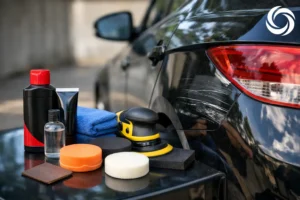
Not every paint issue needs a full collision-repair process. Small scratches, bumper scuffs, and isolated chips can sometimes be repaired successfully with a localized approach. This can be practical when the damage is minor, the surrounding paint is in good condition, and the affected area is positioned where a transition can be hidden naturally.
The limitation is visibility. Dark colors, bright solid colors, metallic finishes, and damage near a panel edge can make a spot repair more difficult to hide. A reputable technician should set realistic expectations rather than promising an invisible result in every situation.
For deeper scratches that expose metal or plastic, prompt attention is worthwhile. Bare metal can begin to corrode, while damaged bumper finishes can worsen as moisture and contaminants work beneath the coating. Addressing the problem early can protect both appearance and long-term value.
A repair should look right when you live with it
At Carbon Collision Repair, the standard is not simply getting paint back on the panel. It is treating every vehicle with the care required to make the repair look right, explain the work honestly, and help customers move forward after damage or an accident.
When you compare paint repair shops, look for clear answers, careful preparation, and a willingness to recommend the repair your vehicle actually needs. The best result is the one that still looks right in the morning sun, under a gas-station canopy, and every time you see your vehicle in the driveway.