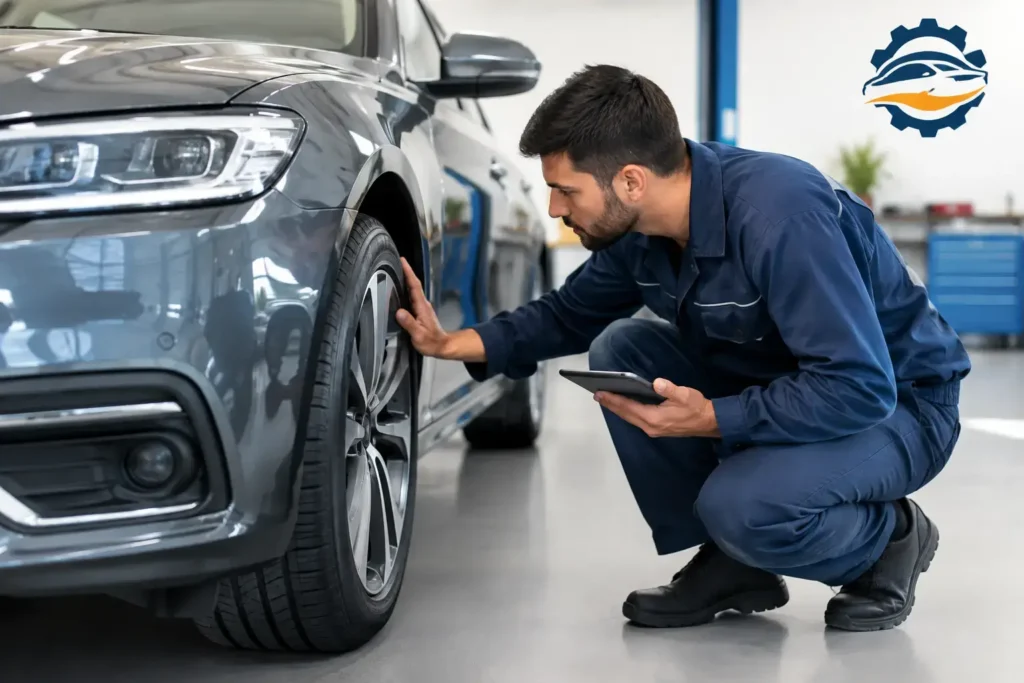
A steering wheel that no longer sits straight on a familiar Lake County road can be easy to ignore. So can a slight pull after hitting a pothole or brushing a curb. But these can be early signs your car needs alignment, and waiting too long can turn a manageable correction into uneven tire wear, reduced handling confidence, and added stress behind the wheel.
Wheel alignment is not just about keeping a vehicle pointed straight. It is the process of setting the angles of the wheels so they work together as intended by the manufacturer. Proper alignment supports predictable steering, helps tires wear more evenly, and allows suspension components to do their job correctly.
7 Common Signs Your Car Needs Alignment Now
1. Your vehicle pulls to one side
One of the most recognizable alignment concerns is a vehicle that drifts or pulls left or right on a level, straight road. If you briefly relax your grip on the steering wheel in a safe area and the vehicle consistently moves toward one side, it deserves attention.
A pull is not always caused by alignment alone. Tire pressure differences, uneven tire wear, a sticking brake component, or road slope can create a similar feeling. Still, if the pull appeared after a pothole, curb strike, or accident, an alignment inspection is a sensible next step.
2. The steering wheel is off-center
When driving straight, your steering wheel should generally sit centered. If it is tilted to one side while the vehicle travels straight ahead, the wheel angles may be out of specification.
An off-center steering wheel can happen gradually, but it is especially common after an impact. It may seem cosmetic at first, yet it often points to a condition worth inspecting. Correcting it helps restore a more natural driving position and can prevent the driver from constantly compensating on the road.
3. Your tires are wearing unevenly
Take a close look at your tire tread, especially along the inside and outside edges. Excessive wear on one edge, feathered tread that feels smooth in one direction and sharp in the other, or patchy wear can indicate an alignment problem.
Tires are a major investment, and alignment can have a direct effect on how long they last. That said, tire wear patterns can also reflect improper inflation, worn suspension parts, tire rotation intervals, or a tire problem itself. A professional inspection separates the likely causes instead of treating every worn tire as an alignment issue.
4. The steering feels loose, unstable, or unusually heavy
A vehicle that feels vague in turns or requires frequent small steering corrections may have an alignment concern. Some drivers describe it as a wandering feeling, particularly at highway speeds. Others notice that the vehicle does not return smoothly toward center after a turn.
Alignment is only one possible explanation. Worn steering or suspension components can affect the same area of vehicle behavior. Because those parts influence how the wheels are positioned and controlled, they should be inspected before any alignment adjustment is completed.
5. You feel vibration through the steering wheel
Steering wheel vibration is more often connected to tire balance, wheel damage, or tire issues than alignment by itself. Even so, it should not be dismissed, particularly if it started after a pothole, road debris, or collision.
A hard impact can affect more than one area at once. A wheel may be bent, a tire may be damaged, and suspension angles may shift. Having the full concern evaluated helps avoid replacing or adjusting one item while the underlying issue remains.
6. You recently hit a pothole, curb, or parking barrier
Northeastern Illinois and southeastern Wisconsin drivers know that rough pavement can appear without much warning. A sharp pothole impact can be enough to alter wheel angles or damage a component that helps maintain them. A curb hit while parking can do the same, even if the vehicle still seems to drive normally afterward.
Not every bump requires an immediate alignment. The severity of the impact, the vehicle’s condition, and any new symptoms all matter. If you notice a pull, vibration, off-center steering wheel, or new tire wear after an impact, schedule an inspection rather than waiting for the next tire replacement.
7. Your vehicle has been in an accident
Even a minor collision can affect alignment-related parts. A low-speed impact may shift a suspension component, damage a wheel, or affect structural mounting points in ways that are not obvious from the outside. Cosmetic damage and mechanical damage do not always appear together.
This is especially relevant after a front-end, side, or wheel-area impact. A thorough collision repair process should account for the condition of the suspension, steering, wheels, tires, and structure as needed. If something does not feel right after repairs or after an accident, speak up promptly. Clear communication gives the repair team the best opportunity to inspect the correct area.
What Causes Wheels to Fall Out of Alignment?
Normal driving can gradually change alignment angles over time, especially on roads with potholes, uneven pavement, and frequent construction zones. Worn suspension and steering parts can also allow wheel angles to shift beyond their intended settings.
More sudden changes usually follow an impact. Common examples include hitting a curb, striking a deep pothole, driving over debris, or being involved in a collision. Lowered vehicles, modified suspensions, and vehicles carrying unusually heavy loads may also need alignment checks more often, depending on how they are used.
Alignment settings are commonly described as camber, caster, and toe. Those terms refer to the direction and angle of the wheels relative to the vehicle and the road. Drivers do not need to diagnose these measurements themselves. What matters is recognizing changes in steering, handling, and tire wear early enough to have the vehicle assessed.
Alignment, Tire Balancing, and Suspension Repair Are Different
These services are often mentioned together, but they solve different problems. Wheel alignment adjusts the direction and angles of the wheels. Tire balancing corrects weight distribution around a wheel and tire assembly to reduce vibration. Suspension or steering repair addresses worn, bent, or damaged components that affect how the vehicle rides, turns, and holds its alignment.
A proper alignment may not be possible until damaged or worn parts are repaired. For example, an adjustment cannot reliably compensate for a bent component or excessive play in a steering joint. This is why a careful inspection matters after a collision or a strong road impact. The goal is not simply to make the steering wheel look straight. It is to identify what is affecting the vehicle and recommend the repair that fits its actual condition.
When Should You Schedule an Alignment Inspection?
There is no single mileage interval that works for every vehicle. A commuter traveling rough roads daily may need an inspection sooner than a vehicle used mostly for smooth, local trips. Checking alignment when installing new tires is often practical, since it can help protect the new tread from premature wear.
You should also consider an inspection after a collision, curb strike, pothole impact, suspension repair, or any time the vehicle begins pulling or steering differently. Do not wait for the symptoms to become severe. Tires can wear quickly when the angles are significantly off, and the inside edge of a tire may wear down before it is obvious during a casual walk-around.
At Carbon Collision Repair, our team can inspect collision-related damage and help determine whether steering, suspension, wheel, tire, or structural concerns may be affecting the way your vehicle drives. We believe in clear explanations and honest recommendations, so you understand what we find and why it matters.
If your vehicle is asking for constant steering correction or showing uneven tread after a hard impact, trust that change in behavior. A timely inspection can help protect your tires, restore a more comfortable drive, and give you clearer answers before a small concern has more time to develop.