You hear a noise you hoped never to hear, the car comes to a stop, and then the real question starts: is my vehicle actually safe to drive? Most people can see the crumpled fender. Almost nobody can see what happened underneath it. That is where frame straightening comes in, and it is the part of collision repair that matters most for your safety.
What Frame Straightening Actually Is
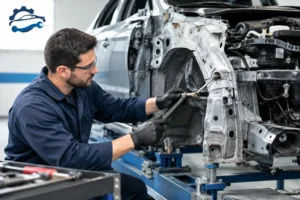
Every modern vehicle is built around a structural skeleton. On a body-on-frame truck or SUV, that skeleton is a steel ladder frame. On most cars today, it is a unibody: stamped panels welded into one rigid shell that absorbs crash energy and holds the suspension, engine, and doors in precise relationship to each other.
Frame straightening is the controlled process of pulling that structure back to the dimensions it had when it left the factory. Not “close enough.” Not “it looks straight.” Back to the manufacturer’s published measurements, taken from specific control points on the vehicle.
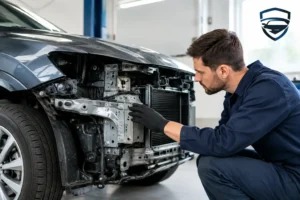
Here is why that distinction matters. Your alignment angles, your tire wear, your door gaps, and your airbag sensors all assume the structure is where it is supposed to be. When it is off by even a fraction of an inch, the car can still look fine in a parking lot while driving down the road with a pull, a vibration, or a compromised crumple zone.
The Warning Signs of Frame Damage
Some frame damage announces itself. Some does not. Look for these signals after any impact, even a moderate one:
-
Uneven or widening gaps around doors, hood, or trunk
-
A steering wheel that sits off-center while you drive straight
-
The vehicle pulls to one side, or new tires wear unevenly
-
A door, hood, or trunk that closes hard or needs a slam
-
Visible wrinkling, ripples, or paint cracking on the floor pan or inner panels
-
A shudder or clunk over bumps that was not there before
-
Airbag or traction control warnings after the accident
One more thing worth saying plainly: a clean-looking exterior is not proof the structure is sound. Modern bumpers and covers flex and spring back, hiding damage beneath. That is why a visual walkaround is a starting point, not an inspection.
How the Straightening Process Works
Proper frame straightening is measurement first, pulling second, and verification last. Anytime the order gets skipped, the repair gets worse.
1. Computerized measuring
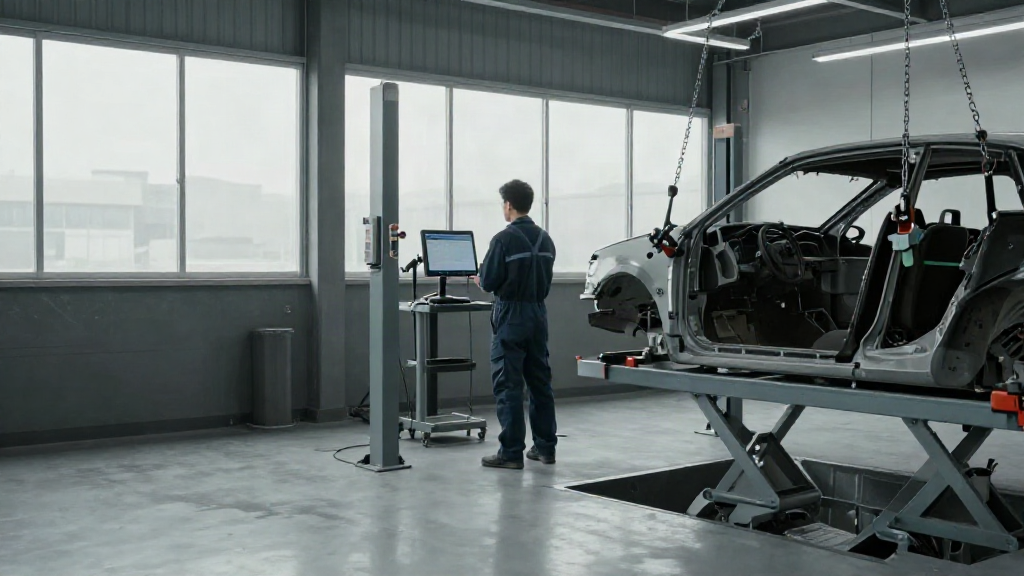
The vehicle goes onto a straightening rack and is anchored at the factory control points. A computerized measuring system then compares dozens of reference dimensions against the manufacturer’s specifications. This is how a technician finds damage and how severe it is, instead of guessing from what is visible.
2. A written repair plan
The measurements produce a map of what is bent and by how much. From there, the technician determines the sequence of pulls and which anchors to use. Structural repairs get planned in a specific order because pulling one area out of sequence can distort another.
3. Controlled pulls
Hydraulic rams apply measured force through chains and clamps attached to the damaged areas. Pulls are done in small increments, with measuring checks between them. Think of it less like brute force and more like a careful, repeatable correction, with a number to confirm each step.
4. Replacing what cannot be straightened
Some structural components are designed to absorb energy once and be replaced, not repaired. A responsible shop tells you which parts are being replaced versus repaired, and why.
5. Proof, not promises
Before the vehicle is released, the structure is re-measured against spec. Alignment is checked, panel gaps are verified, and safety systems are confirmed. If the numbers do not line up, the job is not done.
Why Skipping It Hides Bigger Problems
It is tempting to look at a quote that leaves out structural work and assume you are saving money. Often you are just moving the cost and the risk somewhere less visible.
A vehicle with uncorrected structural damage may never align properly, which chews through tires. It may not absorb a second impact the way it was engineered to, which puts you and your passengers at risk. It may also fail to protect the resale value you were counting on, or create problems when the car is inspected, insured, or traded in.
There is a liability angle too. If an insurer or a future buyer asks for documentation of structural repair and there is none, the conversation gets uncomfortable fast.
What to Expect During the Process
For most customers the timeline looks like this: the vehicle is inspected and measured, and an estimate is written. If insurance is involved, the shop documents the structural findings and works with the adjuster so the approved scope matches what the car actually needs. Once approved, the vehicle moves through straightening, structural part replacement, body and paint work, and finally alignment and safety checks before delivery.
Ask three questions at the estimate stage, and you will know a lot about who you are working with:
-
Was the vehicle measured on a computerized system, and can I see the readings?
-
Which parts are being repaired, and which are being replaced?
-
Will alignment and safety systems be verified before I get the keys back?
A shop that answers all three clearly is a shop that plans to do the work properly.
The Bottom Line
Frame straightening is not an upsell or a scare tactic. It is the measurement-driven process that puts your vehicle’s structure back where the engineers designed it to be. If you have been in an accident and you are not sure whether your car needs structural work, get it measured by a shop that can show you the numbers.
Carbon Collision Repair is a locally owned shop with more than 25 years of experience serving Waukegan, Lake County, and McHenry County in Illinois and Kenosha County in Wisconsin. We offer free estimates, work with insurance claims, and walk you through the structural findings in plain language so you can make an informed decision about your vehicle. Call us to schedule an inspection, and we will tell you honestly what your car needs.