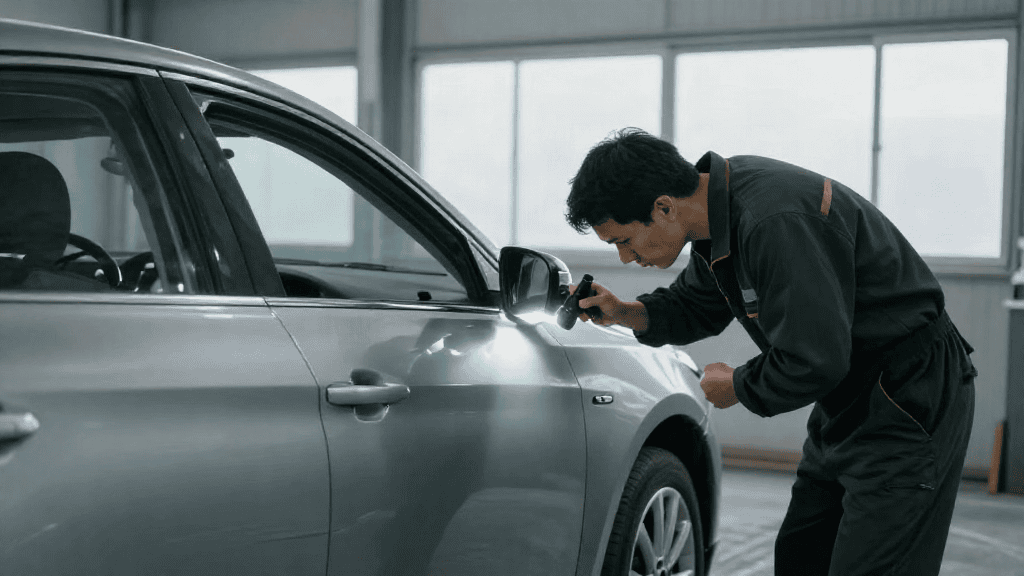
When your vehicle takes a hit on the side or rear, one of the first questions you will ask is whether the quarter panel can be repaired or has to be replaced. The answer changes your bill by thousands of dollars. This guide breaks down the cost of quarter panel replacement, compares it side by side with repair, and shows you how to choose the right path for your vehicle.
What Is a Quarter Panel, and Why Does the Damage Matter?
The quarter panel is the large body panel covering the rear section of your car, running from the rear door back to the taillight and down over the rear wheel. Unlike a front fender, which bolts on and can be unbolted in minutes, the quarter panel is usually welded into your vehicle’s unibody structure. That single difference is why quarter panel damage is often more serious, and more expensive, than it first appears.
Because the quarter panel is part of the car’s structural shell, it also affects crash protection and how the surrounding panels line up. Damage that looks cosmetic on the surface can hide stretched or bent metal underneath, which is why a hands-on inspection should always come before any estimate.
Quarter Panel Repair vs. Replacement: The Core Difference
Repair means our technicians work with the metal that is still there. We pull dents, straighten creases, grind, fill, sand, and repaint so the panel returns to its original shape. Replacement means cutting out the damaged section and welding in a new or clean used panel, then blending the seams and paint to match.
Repair keeps more of your factory metal and usually costs less. Replacement restores the panel to like-new condition and is often the only safe option when the metal is torn, stretched, or rusted through.
What Does Quarter Panel Replacement Cost?
The cost of quarter panel replacement varies widely by vehicle, severity, and shop. Across the industry, a repair often runs from a few hundred dollars up to around $1,000, while a full replacement commonly lands between roughly $1,500 and $4,000, and can climb higher on luxury or specialty vehicles where parts and paint matching are more demanding. Treat those as ranges, not quotes. Your actual number depends on the specific vehicle in front of us.
Several factors push the cost up or down:
- Part cost: new OEM, aftermarket, or a clean used panel
- Labor hours: welding, sealing, and refinishing add time quickly
- Paint and blending: matching modern finishes across adjacent panels
- Hidden damage: rust, inner structure, and wheel-well issues
- Vehicle type: trucks, SUVs, and classics differ from compact cars
When Repair Makes More Sense
Repair is usually the right call when the damage is limited to dents, scratches, or shallow creases; when the metal is not torn or rusted; when the panel still lines up cleanly with the doors, trunk, and taillights; and when the vehicle’s age or value does not justify a major structural repair. In these cases, a skilled technician can restore the finish and shape without disturbing your factory welds.
When Replacement Is the Smarter Choice
Replacement becomes the safer option when the panel is crumpled, torn, or folded along a sharp crease; when rust has eaten through the metal; when the panel no longer aligns with the rest of the body; or when the vehicle is newer or holds its value, so protecting structural integrity and resale matters. If airbags deployed or structural components were involved, replacement is often the only way to restore the vehicle properly.
How Insurance Factors Into the Decision
If the damage came from a collision and you carry collision coverage, your insurer typically pays to restore the vehicle to its pre-accident condition, minus your deductible. Insurers generally authorize repair when it is safe and cost-effective, and replacement when repair would not restore the vehicle correctly. A good shop documents the damage thoroughly and advocates for the right repair, so you are not left with a cosmetic fix over a structural problem.
How Carbon Collision Repair Approaches the Decision
At Carbon Collision Repair, we have spent over 25 years restoring vehicles for drivers across Antioch and the surrounding communities. We serve Lake County and McHenry County in Illinois, and Kenosha County in Wisconsin, and we are locally owned and operated. Every recommendation starts with a free estimate, a careful inspection, and a plain-language explanation of both options before you commit to anything. We also work directly with insurance claims and offer military discounts.
Frequently Asked Questions
Is it cheaper to repair or replace a quarter panel?
Repair is almost always cheaper when the damage is shallow and the metal is still sound. Replacement costs more because of parts, welding, and paint work, but it is the safer choice when the panel is torn, folded, or rusted.
How long does a quarter panel replacement take?
A repair may take one to three days, while a replacement often takes three to seven days depending on parts availability and paint curing time.
Will insurance cover a quarter panel replacement?
If you have collision coverage, your insurer generally covers the approved repair method for collision-related damage, minus your deductible. We help document the damage so the claim reflects what your vehicle actually needs.
The Bottom Line
Whether you repair or replace comes down to how much damage the metal has taken and what your vehicle is worth. Repair saves money when the panel is sound; replacement protects safety and resale when it is not. If you are facing quarter panel damage in the Antioch area, get a free estimate from our team and we will walk you through both options, side by side, before you decide.