A freshly painted panel can look finished when it leaves the shop, but the coating is still completing an important part of the repair. This guide to auto paint curing explains what happens after automotive painting, why the first few weeks matter, and how everyday driving and washing habits can affect the final appearance of your vehicle.
Whether your vehicle received a bumper repair, scratch repair, complete respray, or custom paintwork, proper curing helps protect the color, gloss, and durability of the new finish. A quality repair begins with careful preparation and application, then continues with the right care once the vehicle is back in your driveway.
What Auto Paint Curing Really Means
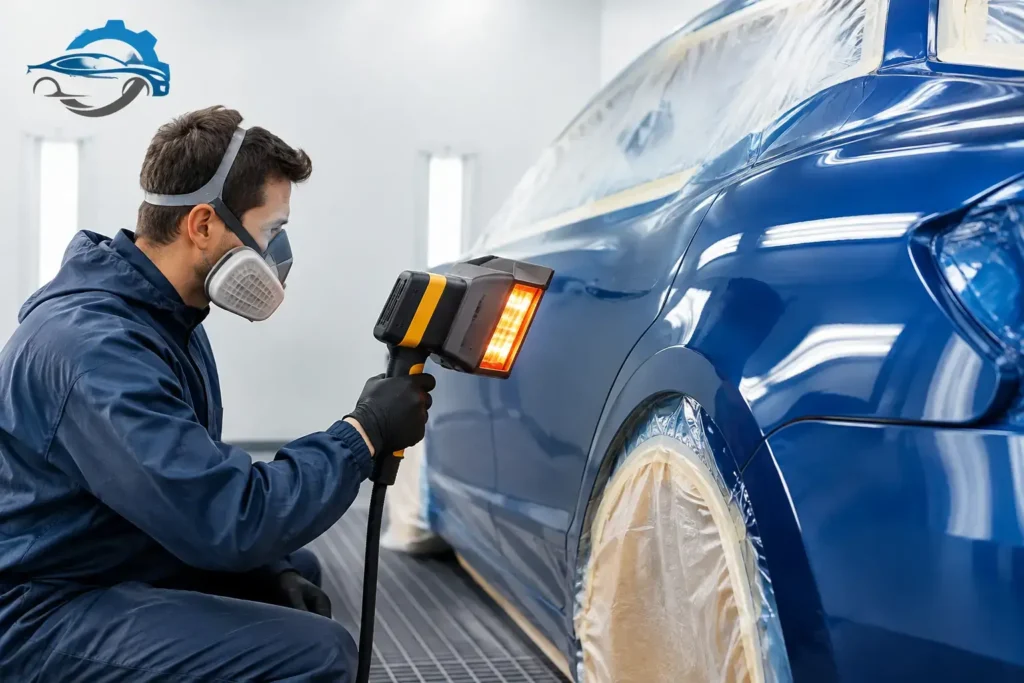
Dry paint and cured paint are not always the same thing. A painted surface may feel dry to the touch relatively soon after it is sprayed, especially when a professional shop uses a controlled spray booth and baking process. That does not necessarily mean the paint system has reached its full hardness.
Curing is the chemical process that allows primer, basecoat, and clear coat materials to harden and bond as intended. Modern automotive finishes are designed to withstand weather, road debris, washing, and routine use, but they need time to fully stabilize. Heat, humidity, paint type, film thickness, and the repair process all influence the curing period.
For most customers, the practical takeaway is simple: your repaired vehicle can usually be driven normally after pickup, but it deserves gentler treatment while the finish continues to cure.
Why Proper Curing Matters After a Repair
Clear coat provides much of the gloss and protection people notice on a freshly repaired vehicle. During the early curing period, harsh chemicals, abrasive washing tools, and unnecessary pressure can mark or dull the surface more easily than they would on a fully cured finish.
This does not mean you need to keep the vehicle parked for weeks. It means avoiding a few preventable risks while the finish reaches its full strength. Proper care can help reduce the chance of swirl marks, water spotting, staining, or damage to a new painted area.
Curing also matters when a repair blends new paint into adjacent panels. Skilled refinishing is intended to create a consistent appearance, but the repaired area may continue to settle slightly as materials cure. Letting the paint system do its job helps preserve the quality of the work.
A Practical Guide to Auto Paint Curing at Home
The care instructions provided by your repair shop should always come first, because products and conditions vary. Still, several common practices are useful for most newly painted vehicles.
Drive Normally, but Be Mindful of the First Few Days
Normal driving is generally fine unless your technician gives you different instructions. However, avoid situations that expose a fresh finish to unnecessary contamination. Construction dust, fresh road tar, gravel roads, tree sap, bird droppings, and heavy mud can be harder to remove if they sit on new paint.
If something lands on the surface, do not scrub it with a dry towel or paper product. Gently rinse the area with clean water when possible and use a soft, clean microfiber towel only if needed. Pressing or rubbing grit into any painted panel can create scratches, especially in a fresh clear coat.
Wait Before Washing the Vehicle
A gentle hand wash is generally safer than an automatic car wash during the early curing period. Brush-style automatic washes can be abrasive, and even touchless washes may use strong detergents or high-pressure water that is best avoided until the paint has had adequate time to cure.
When it is time to wash the vehicle, use a pH-balanced automotive soap, clean water, and soft wash materials. Avoid household cleaners, dish soap, stiff brushes, and dirty sponges. These products can strip protection, leave residue, or introduce fine scratches.
If road salt is a concern during a northern Illinois or southeastern Wisconsin winter, ask the repair shop for specific guidance. Keeping salt off the vehicle matters, but the safest cleaning method may depend on how recently the paintwork was completed and current weather conditions.
Hold Off on Wax, Sealants, and Ceramic Coatings
Wax, paint sealants, and ceramic coatings can be valuable tools for protecting a vehicle’s finish. The timing matters. Applying a protective product too soon may interfere with the release of solvents or the final curing process.
Many paint manufacturers and repair facilities recommend waiting a set period before applying wax or other coatings. That period can vary, so it is wise to follow the instructions tied to your specific repair rather than relying on a one-size-fits-all rule. If you are considering a ceramic coating after a respray or restoration, discuss the plan before scheduling the service.
Park Smart When You Can
Whenever practical, park in a garage or covered area during the earliest stage of curing. This can limit exposure to direct sun, falling leaves, sap, bird droppings, and airborne debris. A covered parking space is helpful, but do not use a tight or abrasive car cover against a freshly painted surface unless your repair professional says it is appropriate.
Sunlight alone will not ruin a properly completed repair. The concern is prolonged heat and contaminants sitting on the finish. Prompt, gentle cleaning is more useful than worrying over every hour the vehicle spends outdoors.
What Can Damage Fresh Automotive Paint?
Most paint problems after a repair are not caused by ordinary driving. They come from a small number of avoidable situations: washing with abrasive equipment too soon, allowing tree sap or bird droppings to remain on the panel, using harsh cleaners, or rubbing dirt into the clear coat.
Fuel spills should also be cleaned carefully and promptly. Gasoline can affect automotive finishes if it sits on the surface. Wipe it using a clean, soft microfiber towel, then follow your shop’s recommended washing guidance.
Adhesive-backed items deserve extra attention. Avoid attaching decals, magnetic signs, paint-protection accessories, or tape near a newly refinished area until the paint has fully cured. Removing adhesive from fresh clear coat can create an unnecessary problem.
How Weather Affects the Curing Process
Temperature and humidity affect automotive paint at every stage. Professional body shops control these conditions as closely as possible during preparation, spraying, and baking. Once the vehicle leaves the facility, seasonal weather still influences how carefully you should treat the finish.
Cold weather can slow curing, while extreme heat can make contaminants bake onto the surface. Humid conditions may also make drying after washing take longer. These variables do not mean a repair is unreliable. They simply reinforce why post-repair care instructions should be based on the materials used and the conditions surrounding the repair.
For classic cars, custom-painted vehicles, and complete resprays, the stakes can be higher because the finish may involve multiple layers, specialty products, or extensive color sanding and polishing. These vehicles benefit from a conversation about storage, washing, and long-term protection before they leave the shop.
When to Call the Repair Shop
A fresh paint repair should look clean, consistent, and professionally finished at delivery. If you notice an issue after pickup, such as a new scratch, peeling, staining that will not lift with gentle cleaning, or a concern about the repaired panel, contact the shop before trying aggressive products or at-home fixes.
Clear communication protects your vehicle and helps the repair team understand what happened. Photos taken in good lighting can be useful, but an in-person inspection often gives the clearest answer. At Carbon Collision Repair, customers can ask questions about aftercare and receive straightforward guidance based on the work performed.
A newly painted vehicle does not need complicated treatment. Give the finish time, keep contaminants from sitting on it, wash it gently when advised, and wait for approval before applying wax or coatings. That extra care gives quality paintwork the best opportunity to keep looking right long after the repair is complete.