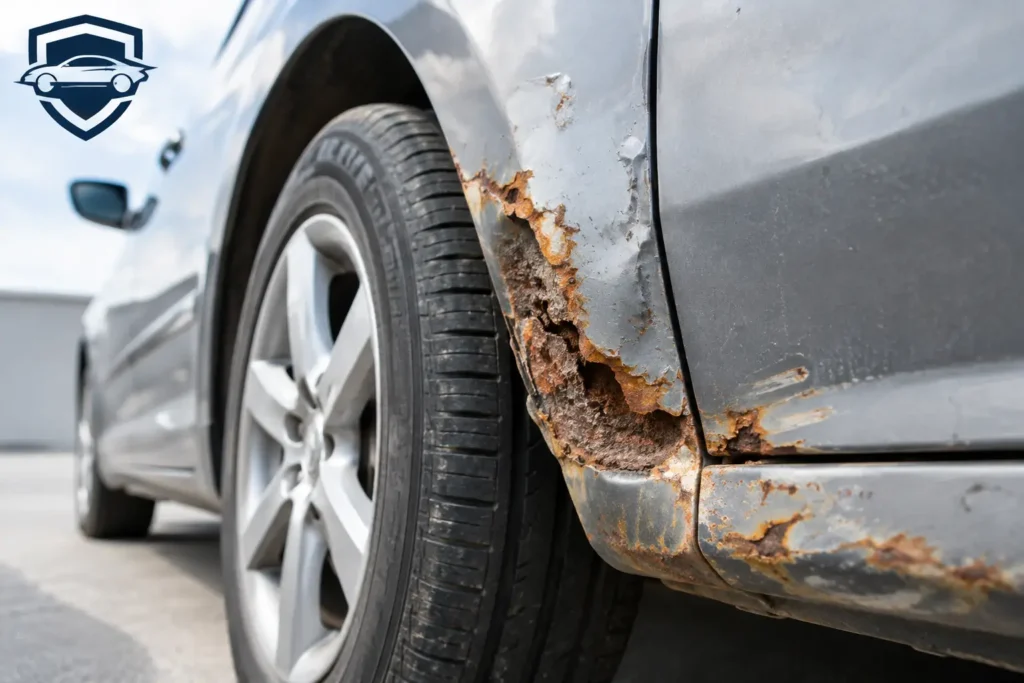
A small scrape from a parking lot bump can look like nothing more than a cosmetic problem. But five signs of collision rust can reveal that moisture has reached bare metal beneath the paint, where corrosion may continue long after the original damage is forgotten. Catching it early gives you more repair options and helps protect your vehicle’s appearance, structure, and resale value.
Rust does not always mean a vehicle was repaired poorly, and it does not always start immediately after an accident. A damaged paint surface, bent panel edge, cracked seam sealer, or trapped road moisture can all create the right conditions. In northeastern Illinois and southeastern Wisconsin, winter salt and changing temperatures can make that process move faster.
Five Signs of Collision Rust to Watch For
1. Bubbling, lifting, or cracked paint near the damaged area
Paint is meant to seal the metal underneath it. When rust begins below the surface, it pushes upward, creating small bubbles, raised spots, peeling edges, or cracks in the finish. This often appears around a previously repaired fender, door, quarter panel, rocker panel, or bumper mounting area.
A bubble may be no larger than a pencil eraser, but it should not be ignored. Sanding and touching up the visible spot may help only if corrosion has not spread beneath the paint. If rust has already formed behind the panel surface, the repair needs to address the affected metal and restore the protective coating, not simply cover the discoloration.
Look carefully along body lines and near panel edges. These areas can collect moisture and may hide early corrosion until the paint begins to separate.
2. Rust forming along seams, welds, and panel edges
Collision repairs often involve areas where panels meet: door jambs, wheel openings, trunk channels, hood edges, rocker panels, and lower fender sections. These locations depend on properly sealed seams to keep water, salt, and debris from entering.
A thin brown line along a seam can be an early warning that moisture is getting behind the finish. You may also see rust around weld points or where a panel edge appears uneven after impact. In some cases, the issue is a damaged seam sealer caused by the collision itself. In others, the vehicle’s age and road exposure are contributing factors.
The key is not to assume it is only surface rust. A technician can inspect the area from both sides when accessible and determine whether the metal is solid, whether drainage is working, and how far the corrosion has traveled.
3. Corrosion inside a wheel well or behind a damaged fender liner
Wheel wells take a direct hit from water, gravel, slush, and road salt. After an accident, a cracked, loose, or missing fender liner can leave metal that was previously protected exposed to constant spray. Even a minor impact can shift a liner, bend a mounting point, or create a gap where debris collects.
Check inside the wheel well after washing your vehicle, especially if a fender, bumper corner, or lower door was damaged. Warning signs include flaking metal, orange staining, a rough texture along the lip of the wheel opening, or packed dirt that stays damp. A liner that rubs against the tire or hangs loose also deserves prompt attention.
This area can be easy to overlook because it is out of sight, but it is one of the most common places for rust to gain ground. Repairing the liner, fasteners, damaged panel, and protective coatings together helps prevent the same issue from returning.
4. Water leaks, damp carpeting, or moisture in the trunk
Rust is not limited to the outside of a vehicle. A collision can affect weatherstrips, trunk seals, door alignment, rear body panels, window channels, or drainage paths. If water enters the cabin or trunk, it can lead to hidden corrosion in floor pans, spare tire wells, wiring areas, and structural seams.
A musty odor, fogged windows that return quickly, damp carpet, unexplained condensation, or water beneath the trunk mat are all worth investigating. Do not assume the leak will dry out on its own. Water can remain trapped under insulation or behind interior trim, where it is difficult to see and can damage more than metal.
Leaks have several possible causes, so an inspection matters. The goal is to locate the entry point, correct it, dry the affected area thoroughly, and check for corrosion before it becomes a larger repair.
5. Rust spots that reappear after a touch-up or repair
A touch-up can be useful for a very small, fresh paint chip. However, if a rust spot returns in the same place within months, spreads beyond the original chip, or appears beside a repaired panel, there is usually more happening beneath the surface.
This can occur when corrosion was not fully removed, when moisture remained trapped behind a panel, or when a damaged area was not properly sealed after impact. It may also signal a separate issue, such as a clogged drain or a misaligned panel that allows water to enter.
Repeated rust is a reason to have the vehicle evaluated rather than adding another layer of paint. The correct repair depends on the location and condition of the metal. Some areas can be cleaned, treated, primed, painted, and protected. More advanced corrosion may require metal repair or panel replacement to restore a sound surface.
Why Collision Rust Spreads Faster Than It Looks
Rust rarely stays limited to the small orange mark you can see. Once the coating is broken, moisture and oxygen reach the metal. Salt accelerates the reaction, while freeze-thaw cycles can widen tiny cracks in paint and seam sealer. Rust can then creep under surrounding paint, behind trim, and into places that are not visible during a quick walk-around.
The lower portions of a vehicle are particularly vulnerable. Rocker panels, lower doors, wheel arches, underbody components, and trunk wells all face frequent exposure to wet roads and salt. A collision changes the equation when it chips paint, bends a flange, disrupts a seam, or compromises a protective liner.
That said, not every stain is serious corrosion. Brake dust, surface discoloration on an exposed fastener, and rust on certain untreated components can look alarming without affecting the body panel itself. A professional inspection separates a minor cleanup from an issue that needs body repair.
What to Do When You Notice Rust After an Accident
Start by taking clear photos of the area, particularly if the damage is connected to a recent collision or an existing repair estimate. Avoid aggressively scraping, sanding, or using harsh chemicals on the spot. That can remove more protective finish and make it harder to assess the original condition.
Keep the area as clean and dry as practical. After driving on salted roads, wash the vehicle, including the wheel wells and lower body panels. If you notice a loose liner, bent trim, missing clip, water leak, or paint damage with exposed metal, arrange an inspection instead of waiting for warmer weather.
A qualified collision repair shop can examine the visible damage and the areas behind it when necessary. The repair plan may include corrosion removal, metal repair, seam sealing, primer, color-matched paint, clear coat, and replacement or adjustment of damaged liners, trim, or seals. The right approach depends on how deep the corrosion has gone and whether the collision affected adjoining components.
For an insurance-related accident, it can also help to share the concern early. Rust caused or worsened by collision damage may need to be documented as part of the repair discussion. Coverage decisions depend on the policy and claim details, but clear photos and a thorough inspection give everyone a more accurate picture of the work involved.
A Small Spot Is Worth a Closer Look
A vehicle does not need to be heavily damaged for rust to become a concern. Often, the earliest signs are easy to miss: a paint bubble near a wheel arch, a damp trunk corner, or a brown line along a panel seam. Addressing those clues promptly can preserve the work around them and prevent a manageable repair from becoming a more extensive one.
If you are unsure whether a spot is surface discoloration or collision-related corrosion, a free estimate from Carbon Collision Repair can provide a clear, straightforward next step. A careful inspection now can help keep your vehicle protected through the next season of road salt, rain, and daily driving.