A parking lot ding, a stray shopping cart, a scrape against a garage frame – most drivers pick up small body damage long before they ever think about a full collision repair. The good news is that modern dent scratch repair is faster, cleaner, and more affordable than many vehicle owners expect. At Carbon Collision Repair in Antioch, Illinois, we walk every customer through the same three-step process, so you know exactly what happens to your vehicle and why the final finish comes out looking like it never happened.
Step One: Assessing Whether It’s a Dent, a Scratch, or Both
Every repair starts with an honest assessment. A dent and a scratch are two different problems, and they often appear together. A dent is a distortion of the metal or plastic panel itself. A scratch is damage to the paint layers – clear coat, color coat, and sometimes primer – with the panel shape left intact.
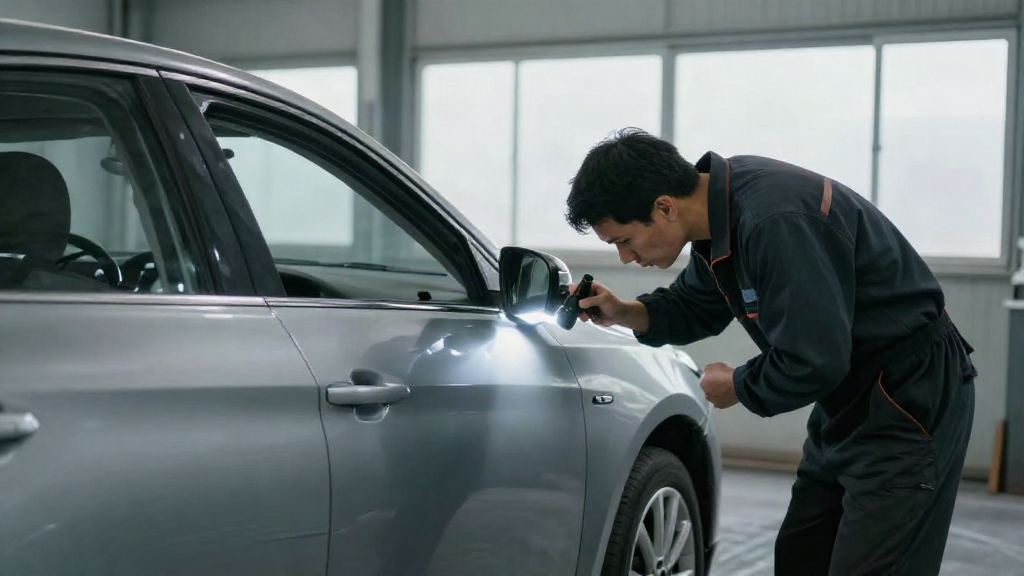
When you bring your vehicle in, a technician inspects the damage under bright, direct lighting and, in many cases, a paint-depth gauge. That inspection answers three questions: how deep is the scratch, how far has the metal stretched, and is the panel’s structure or protective coating compromised? The answers decide which repair path makes sense. Skipping this step is why some budget fixes look great for a month and then start to show ripples, peeling, or mismatched color.
Step Two: Paintless Dent Removal vs. Traditional Dent and Paint Repair
Once we understand the damage, we recommend the least invasive method that will restore the panel correctly. That usually comes down to two options: paintless dent removal (PDR) or traditional repair with body filler, primer, and paint.
When Paintless Dent Removal Is the Best Fit
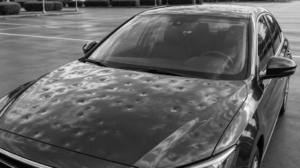
PDR is ideal when the paint is still intact and the metal has not been stretched too far. Using specialized rods and leverage tools, a technician gently massages the dent out from behind the panel. There is no sanding, no filler, and no repainting – which means the factory finish stays exactly as it left the assembly line. Hail damage, door dings, and small creases are classic PDR candidates. Because there is no paint work, PDR is usually faster, less expensive, and keeps your vehicle’s original finish untouched.
When Traditional Dent and Scratch Repair Wins
If the scratch has cut through the clear coat into the color layer, or if the dent has stretched the metal or cracked the paint, PDR alone will not do the job. In those cases we repair the panel surface, smooth it, prime it, and repaint it. Deep scratches, chipped edges, and creased panels all fall into this category. This approach takes longer and costs more than PDR, but it is the only way to restore both the shape and the finish when the paint itself has been damaged.
Here is the part many shops gloss over: the right answer is not always the cheapest one, and it is not always the most thorough one either. It is the method that matches your specific damage. If a panel can be safely restored with PDR, we will tell you so. If it needs paint work, we will explain why – and show you.
Step Three: Color Matching, Blending, and the Final Finish Check
When the repair involves paint, color accuracy is everything. Modern vehicles use a wide range of finishes – metallic, pearl, tri-coat, and matte among them – and the exact shade can shift slightly from the factory over time due to sun and weathering. A generic color code is not enough.
Our technicians use a spectrophotometer to read your vehicle’s actual current color, then mix the paint and spray test panels to confirm the match before it ever touches your car. From there we blend the new paint into the surrounding panels so there is no visible edge or “halo” where the repair ends. The final step is a finish check under daylight-balanced lighting: we look for texture, gloss, and color from multiple angles to confirm the panel blends seamlessly with the rest of the vehicle.
What Affects How Long Dent and Scratch Repair Takes
Timelines vary because no two vehicles and no two repairs are identical. As a general guide, the biggest factors are:
-
The size and depth of the dent or scratch, and how much the metal has stretched
-
Whether the paint is intact (PDR-eligible) or damaged (requiring paint work)
-
The type of finish on your vehicle, since metallic, pearl, and tri-coat colors take longer to match
-
The panel location, because some areas are far easier to access than others
-
Parts availability if a panel or trim piece has to be replaced
Because we give free estimates, you will know the realistic scope and timeframe before any work begins – not after.
Why Local Experience Matters in Waukegan, Antioch, and Beyond
Dent and scratch repair is a skill built over decades, not months. Carbon Collision Repair is locally owned with more than 25 years of experience, serving vehicle owners across Lake County and McHenry County in Illinois, Kenosha County in Wisconsin, and the surrounding communities. We work with insurance claims, offer military discounts, and treat every vehicle – from a first car to a classic restoration project – with the same standard of care.
That local, hands-on experience is what lets us tell the difference between damage that just needs a light touch and damage that needs a full panel refinish. We would rather explain the honest option than sell you a repair you do not need.
Ready to Get Your Vehicle Looking Right Again
If a dent or scratch is taking the shine off your ride, the smartest first move is a close look from someone who does this every day. Carbon Collision Repair offers free estimates, clear communication, and quality workmanship you can trust. Call us at 224-888-4142 or stop by our shop in Antioch, Illinois, and we will assess the damage, explain your options, and get your paint and panels back to looking their best.