A small crack in a windshield can feel like a minor annoyance until sunlight hits it at the wrong angle, rain fills the damaged area, or the line starts spreading across your view. So, can cracked glass be repaired? Sometimes, yes. But the right answer depends on the type of glass, where the damage sits, how large it is, and whether the crack has already weakened the glass beyond a reliable repair.
For vehicle owners, the goal is not simply to make damage less noticeable. It is to restore clear visibility and make a sound repair decision before a manageable issue becomes a larger one.
Can Cracked Glass Be Repaired on Every Vehicle?
Not every piece of automotive glass is made the same way. Windshields are generally laminated, meaning they are built with two layers of glass bonded around a clear plastic layer. That construction is one reason many windshield chips and limited cracks can be professionally repaired.
Side windows, rear windows, quarter glass, and sunroof glass are often tempered instead. Tempered glass is designed to break into many small pieces when it fails. Once it is cracked, it usually cannot be repaired in the same way as a laminated windshield. Replacement is typically the appropriate path.
Even with a windshield, repair is not automatic. A technician needs to inspect the damage rather than judge it from a photo alone. Two cracks that look similar at first glance may have very different repair options because of their depth, direction, contamination, or location.
When a Windshield Repair May Be Possible
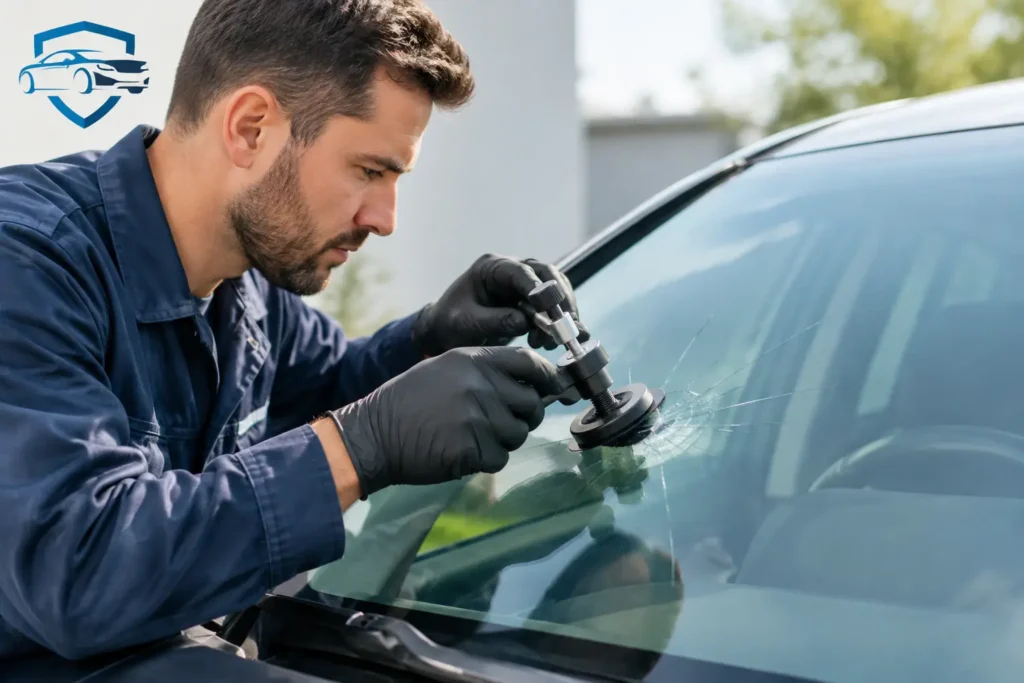
Professional windshield repair works by cleaning the damaged area and injecting a specialized resin into the break. The resin is cured and finished to help stabilize the glass and improve the appearance of the damage. A successful repair often makes a chip or crack much less visible, although it may not disappear completely.
Repairs are more likely to be considered when damage is small, limited in length, and away from the outer edge of the windshield. A recent chip that has stayed clean and dry usually presents a better opportunity than a crack that has been exposed to road grime, moisture, repeated temperature changes, and months of driving.
The location matters just as much as the size. Damage directly in the driver’s primary viewing area may call for replacement even if the crack is relatively small. Repairs can leave a faint mark, and that remaining distortion can be distracting when driving at night or in bright sunlight.
A technician will also look closely at the shape of the break. Simple chips and short cracks may be repairable, while damage with multiple legs, a deep impact point, or separation between the windshield layers may not be. There is no responsible one-size-fits-all rule. An inspection provides the clearest answer.
Why edge cracks deserve attention
A crack near the windshield’s perimeter is more concerning than it may appear. The edges help support the glass within the vehicle body, and damage there can spread quickly as the vehicle flexes over uneven roads, encounters potholes, or experiences changing temperatures.
For that reason, an edge crack is often more likely to require windshield replacement. Waiting to see whether it spreads can turn a straightforward decision into a more urgent repair need.
When Replacement Is the Better Choice
Replacement is often recommended when a crack is long, deep, spreading, located at the edge, or positioned where it affects the driver’s sightline. It may also be necessary when the glass has several separate impact points or when an attempted repair would not provide a dependable result.
This does not mean every windshield replacement is caused by dramatic damage. A small crack can change quickly during a cold Lake County morning, after blasting the defroster, or when summer heat warms one side of the glass more than the other. Glass expands and contracts with temperature changes, and existing damage concentrates that stress.
Replacement also becomes more involved on vehicles equipped with advanced driver-assistance systems. Cameras and sensors mounted near the windshield may support features such as lane departure alerts, adaptive cruise functions, or forward collision warnings. After a windshield is replaced, the vehicle may require calibration according to manufacturer procedures so those systems can operate as intended.
A qualified repair facility can explain what your vehicle needs before work begins. Clear communication matters here because the visible crack is only one part of the repair decision.
Do Not Count on a DIY Glass Repair Kit
Do-it-yourself repair kits can be tempting, especially when the chip looks small. Some can reduce the appearance of a fresh, simple chip, but they have limits. They cannot reverse major cracking, repair tempered side or rear glass, or correct damage that has reached the edge of a windshield.
The bigger concern is that an unsuccessful DIY attempt can leave resin in the break or trap contamination inside it. That may limit what a professional can do afterward. If you are considering a kit, it is wise to have the damage assessed first, particularly if the windshield is cracked rather than merely chipped.
Avoid household adhesives, tape intended as a permanent fix, or drilling into the glass. These approaches can worsen the damage and make the repair process more complicated. They also do not address the condition of the glass beneath the surface.
What to Do While You Wait for an Inspection
You cannot always prevent a crack from growing, but a few practical steps may reduce additional stress on the glass. Keep the damaged area as clean and dry as possible, avoid slamming doors, and do not direct extreme heat or cold at the windshield. If you use a temporary covering over a chip, apply it gently and remove it before a professional inspection.
Try not to delay if the crack is expanding or interfering with visibility. Roads, weather, and normal body movement while driving can all cause the damage to change. Prompt evaluation gives you the best chance of preserving a repair option when one exists.
If a side or rear window has broken, protect the interior from weather and loose glass, and arrange service as soon as practical. Broken tempered glass does not become stable again, so replacement is generally needed.
Insurance and Glass Repair Decisions
Insurance coverage for glass damage varies by policy, deductible, and the circumstances of the loss. In some cases, a repair may be handled differently from a full windshield replacement. The most useful first step is to understand the condition of the glass and receive an honest estimate of the recommended work.
Carbon Collision Repair can help customers understand the repair process and assist with insurance claim communication when appropriate. The focus should remain on selecting a repair or replacement that fits the damage, your vehicle’s needs, and the information available through your coverage.
A Clear View Starts With an Honest Assessment
Cracked auto glass deserves more than a quick guess from the driver’s seat. A repair may preserve your original windshield when the damage is limited and well-positioned. In other situations, replacement is the more responsible option for visibility, fit, and long-term reliability.
If you notice a chip, crack, or broken vehicle window, have it inspected before weather and daily driving add to the problem. A straightforward assessment can give you a clear plan and one less thing to worry about on the road.